

Alcohol and Loyalty Programmes: How Free Drinks and VIP Service Shape Session Length
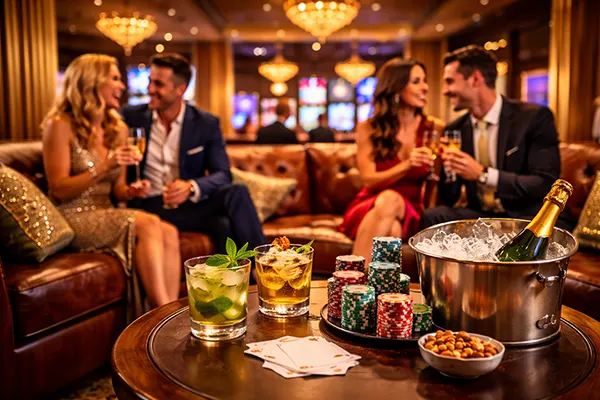
Casino Comps and Alcohol: Why Sessions Run LongerIn land-based casinos, complimentary alcohol has never been just “hospitality”. It is usually tied—directly or indirectly—to loyalty schemes that reward time on device and repeated play. In 2025, most major operators run structured player tracking: you earn points for theoretical loss, receive tier status, and unlock benefits such as drink vouchers, bar credit, lounge access, priority seating, and host attention. The combined effect is simple: the longer you stay, the more you feel you are “getting back”, and the easier it becomes to keep playing without noticing how the session is stretching.
How “Comped Drinks” Create a Reward Loop
Complimentary drinks work as a behavioural reinforcer. The player places bets, the casino responds with an immediate, tangible reward (a drink, a voucher, a lounge stamp), and the brain links gambling with comfort and social ease. This is a classic reward loop: action → reward → increased likelihood of repeating the action. Studies discussing loyalty participation regularly connect these schemes with more frequent gambling, longer sessions, and higher overall spend, which is precisely why casinos invest in them.
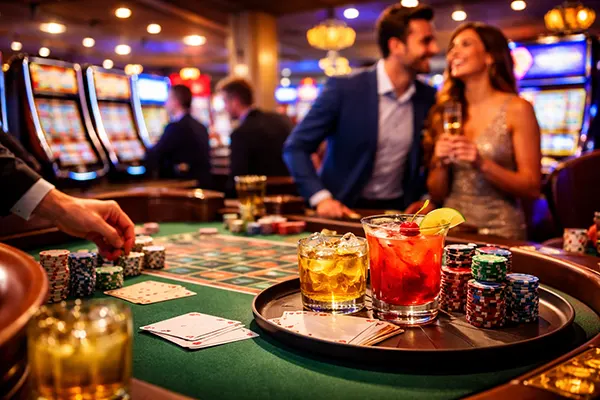
What makes alcohol particularly effective is timing. A drink arrives when the player is already engaged, and it becomes a “session marker”: one drink turns into two, then “one more while I’m here”. Alcohol can reduce inhibition and impair judgement, making it easier to chase losses or increase stakes without the same level of caution. This is why many responsible gambling services warn about mixing alcohol with betting activity.
In some venues, drink comps are not truly unconditional. They may be earned through tracked play, or offered more frequently to players spending longer at tables or machines. When the reward depends on continued gambling activity, it strengthens the behavioural loop: stay longer, receive more, and feel less urgency to stop.
Where Loyalty Mechanics Quietly Extend Play
Most loyalty programmes translate gambling activity into points, and points into “comps”: drink tokens, buffet discounts, hotel nights, event tickets, and discretionary perks from hosts. The key psychological trigger is “proximity”. When a player feels close to the next tier or reward threshold, it becomes tempting to keep playing to “finish the level”, even if the plan was to stop earlier.
VIP service adds another layer through status and personal attention. A host greeting you by name, a reserved seat, or priority entry feels like recognition rather than marketing. Once perks become part of your routine, leaving early can feel like wasting value you have “earned”, even though the real cost was already paid through gambling activity.
There is also the “loss disguise” effect. If a player loses £200 but receives £30 in bar credit and a free meal, the night can feel less costly—despite the financial reality. Loyalty rewards do not need to cover losses; they only need to reduce discomfort enough to keep someone playing.
Land-Based Casinos vs Online: Same Idea, Different Delivery
In a physical casino, alcohol is an on-site service that can be deployed strategically: drinks delivered while you play, bars positioned to keep you on the gaming floor, lounges that turn breaks into another reason to stay. Online casinos do not serve alcohol, but the same retention logic appears in other ways—cashback, personalised offers, VIP messaging, and constant accessibility.
Land-based operators also operate within licensing conditions that can restrict how alcohol is promoted. In Great Britain, for example, rules exist to prevent incentives that directly pressure someone to gamble in exchange for alcohol. This matters because it limits the most aggressive forms of “drink-to-play” behaviour and requires a clearer separation between hospitality and gambling activity.
Online loyalty schemes use different rewards: free bets, free spins, reload bonuses, VIP account managers, faster withdrawals, and exclusive promotions. The mechanisms are still designed to reduce the psychological friction of continuing. If alcohol is present at home, it can amplify impulsivity in the same way as in a venue, but without staff or social cues to encourage stopping.
Why the Home Setting Can Increase Blind Spots
At home, there are fewer natural stopping points. No travel time, no closing hours, no staff walking by, no need to exchange cash. If alcohol is involved, time perception can slip easily: a short session turns into hours because there are fewer external cues. That makes pre-commitment tools—deposit limits, session timers, reality checks, and cooling-off options—particularly valuable.
In casinos, some people underestimate how much alcohol they have consumed because drinks arrive gradually, sometimes in smaller servings, and can be topped up without much notice. At home, the opposite risk appears: stronger pours, unmeasured refills, and drinking while distracted by streaming or social media. Both situations can reduce the ability to recognise that decisions are becoming less controlled.
From a behavioural standpoint, both environments aim to keep players engaged: casinos do it with comfort and social reinforcement; online operators do it with convenience and personalised incentives. The most important lesson is that if you do not set boundaries before you start, the environment will set the pace for you.
How Players Can Stay in Control (Practical Rules That Work)
The most reliable approach is to treat alcohol and gambling as two separate decisions. If you plan to gamble, decide in advance whether you will drink, how much, and at what pace. The issue is not moral—it is cognitive. Alcohol reduces inhibitory control and increases impulsive responding, which can shift play from planned entertainment into reactive chasing.
Pre-commitment is stronger than willpower. Set a fixed loss limit (not a target win), a time limit, and a clear stop rule. Use a timer for in-person sessions and activate reality checks online. In a venue, decide how many alcoholic drinks you will accept and then switch to water or soft drinks, even if more is offered. At home, measure pours rather than free-pouring.
Keep loyalty rewards in perspective. A £10 drink voucher is not “money back”; it is an incentive that exists because extended play is profitable. When you mentally subtract comps from losses, you risk staying longer to “make the night worth it”. Treat perks as optional extras, not as a reason to continue gambling.
Simple Control Techniques That Reduce Session Length
Use a “two-clock” system: one timer for total session length (for example, 60–90 minutes), and another for drink pacing (for example, one alcoholic drink per hour). If either timer ends, pause gambling for at least 15–20 minutes and reassess. This interrupts autopilot play, which is where alcohol and loyalty rewards have the strongest combined pull.
Alternate each alcoholic drink with water, and eat before you play. Food and hydration slow alcohol absorption and improve decision stability. This will not eliminate risk, but it reduces the speed at which judgement declines. If you are offered drinks frequently in a venue, ordering sparkling water between alcoholic drinks keeps the social rhythm without increasing impairment.
If you notice any of these signs—raising stakes faster than planned, chasing losses, feeling irritated when you stop, or losing track of time—treat it as a stop signal, not a challenge. The safest response is a break or a session end. Loyalty perks will still exist later; losses do not reverse because you stayed for one more round.