

Game Pace and Drinking Pace: How Slot Speed and Live Games Influence Alcohol Intake
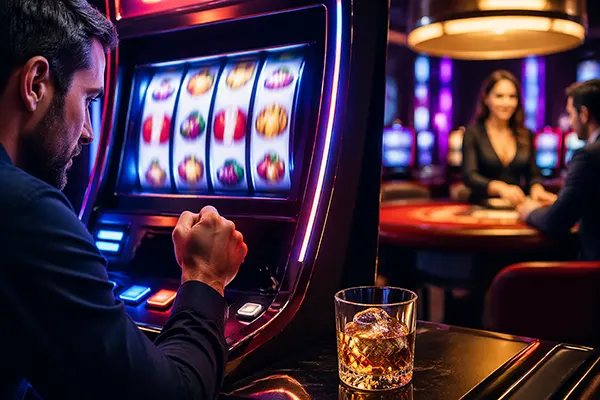
The relationship between gambling behaviour and alcohol consumption has been studied across both land-based venues and online environments, with consistent findings: the pace of play directly affects how much and how quickly people drink. Faster games tend to compress decision-making time and reduce awareness of consumption, while slower formats create natural pauses that influence drinking patterns differently. Understanding this interaction is important not only for players, but also for operators and regulators focusing on responsible play in 2026.
Fast Slots and Rapid Consumption Patterns
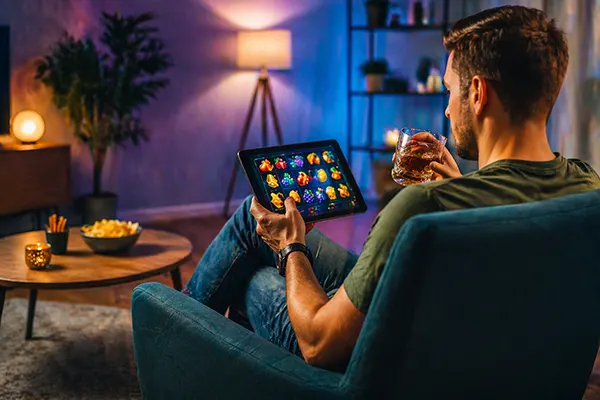
Modern online slots have evolved towards higher-speed gameplay, with features such as turbo spins, autoplay, and quick animations reducing the time between bets to just a few seconds. This continuous rhythm creates an almost uninterrupted flow of action, which often aligns with habitual behaviours such as sipping alcohol. Because there are fewer breaks, players may consume drinks more frequently without consciously noticing the quantity.
Research in behavioural psychology shows that repetitive, high-frequency activities can suppress internal cues like thirst and intoxication awareness. In fast slots, players are focused on outcomes—wins, near-misses, bonus triggers—while their physical behaviour becomes automatic. This means a drink placed nearby is often consumed in parallel with gameplay, rather than as a separate, intentional action.
Another factor is emotional fluctuation. Fast slots generate frequent small wins and losses, leading to micro-reactions that can encourage drinking as a coping or reinforcement mechanism. A quick loss may prompt a sip out of frustration, while a win may trigger celebratory drinking. Over time, this creates a pattern where alcohol intake becomes synchronised with game events rather than personal need.
Autoplay Features and Reduced Self-Monitoring
Autoplay settings, widely available in online casinos in 2026, allow players to place dozens or even hundreds of spins without manual input. This removes a key layer of engagement—the act of clicking or tapping—which would otherwise serve as a behavioural checkpoint. Without these pauses, players are less likely to reassess their state, including how much they have had to drink.
From a cognitive perspective, autoplay shifts the experience from active participation to passive observation. This state is associated with lower self-regulation, meaning individuals are less likely to monitor both their gambling and their alcohol intake. In practical terms, a player might finish a drink without recalling when they started it.
Regulatory bodies in several jurisdictions have already introduced limits on autoplay features, partly due to these concerns. While the primary focus is often on financial risk, the connection to alcohol consumption is increasingly recognised as part of a broader responsible gaming framework.
Live Dealer Games and Social Drinking Behaviour
Live casino games operate at a noticeably slower pace compared to slots. Whether it is blackjack, roulette, or baccarat, each round involves real dealers, physical card handling, and natural pauses between actions. These intervals create opportunities for players to step away momentarily or engage in secondary activities, including drinking.
Unlike slots, live games often simulate a social environment. Players may interact with dealers or chat with others, which mirrors the atmosphere of a physical casino or bar. In such contexts, alcohol consumption is less tied to game speed and more influenced by social norms and habits. Drinking becomes part of the overall experience rather than a reaction to game outcomes.
However, slower pacing does not necessarily mean lower consumption. Extended sessions can lead to cumulative intake over time. A player might drink steadily across an hour-long session, resulting in similar or even higher total consumption compared to fast slot play, albeit at a more controlled rate.
Social Cues and Perceived Moderation
In live dealer environments, players are more likely to perceive themselves as moderating their behaviour because the game itself imposes waiting periods. These pauses can create a sense of control, even if the total duration of play—and drinking—is extended. This perception can sometimes lead to underestimating actual alcohol intake.
Social cues also play a role. Seeing others in a relaxed, conversational setting may encourage similar behaviour, including drinking at a steady pace. This is particularly evident in games like live blackjack, where rounds are frequent enough to maintain engagement but slow enough to allow ongoing interaction.
Importantly, the visibility of the dealer and other players can have a stabilising effect. Unlike solitary slot play, where behaviour is largely private, live games introduce a level of perceived observation. This can reduce excessive actions for some individuals, including rapid drinking, though it does not eliminate the risk entirely.
Cognitive Load, Timing, and Risk Awareness
The pace of a game influences cognitive load—the amount of mental effort required to participate. Fast games demand quick decisions or reactions, leaving little room for reflection. Slower games, by contrast, allow players to process outcomes, consider strategies, and become more aware of their physical state, including intoxication.
When cognitive load is high, as in rapid slot sessions, players rely more on automatic behaviour. This increases the likelihood of habitual drinking patterns, where alcohol consumption occurs without deliberate choice. Over time, this can lead to higher intake simply because there are fewer moments to pause and reassess.
In slower formats, the brain has more opportunities to register internal signals such as fatigue or dizziness. These signals are critical for self-regulation. Players are more likely to notice when they have had enough, both in terms of gambling and alcohol, and adjust their behaviour accordingly.
Practical Implications for Responsible Play
Understanding the link between game speed and alcohol consumption has practical implications for safer gambling strategies. Players can benefit from choosing game formats that naturally include pauses, or by setting personal limits on session length and drink quantity before starting to play.
Simple interventions can make a significant difference. For example, alternating alcoholic drinks with water, setting timers for breaks, or avoiding autoplay features can help maintain awareness. These measures are particularly relevant in fast-paced environments where self-monitoring tends to decline.
Operators also play a role by implementing tools such as session reminders, optional speed limits, and clearer indicators of time spent playing. In 2026, these features are increasingly seen as standard practice, reflecting a broader shift towards integrating behavioural insights into player protection measures.