

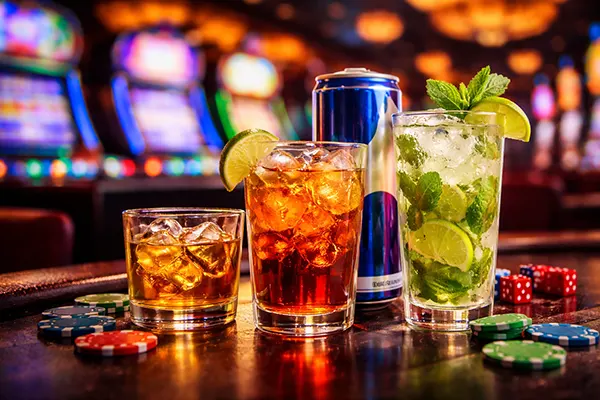
Alcohol and Caffeine in Casinos: Why Energy Drink Mixes Create a False Sense of Control
Casino environments are deliberately intense: bright lighting, constant sound, late operating hours and uninterrupted access to food and drinks. In this setting, alcohol has long been part of the culture. Over the past decade, however, a new pattern has become increasingly common — mixing spirits with energy drinks. The combination of alcohol and caffeine does not simply “balance out” intoxication. Instead, it can distort perception, delay fatigue and create a misleading sense of alertness and control. As of 2026, research in behavioural psychology and public health consistently shows that this mix affects judgement, risk-taking and financial decision-making in ways many players underestimate.
How Alcohol and Caffeine Interact in the Body
Alcohol is a central nervous system depressant. It slows reaction time, reduces inhibition and impairs decision-making. Caffeine, by contrast, is a stimulant. It blocks adenosine receptors in the brain, temporarily reducing the sensation of tiredness and increasing alertness. When consumed together, caffeine does not cancel out alcohol’s impairing effects — it only masks the feeling of sedation.
From a physiological standpoint, blood alcohol concentration (BAC) remains unchanged regardless of caffeine intake. A person who mixes vodka with an energy drink will have the same BAC as someone who drinks vodka alone. However, they may feel less drowsy and therefore underestimate their level of impairment. This mismatch between objective intoxication and subjective perception is where the risk begins.
Clinical reviews published between 2020 and 2025 in European and North American public health journals confirm that individuals consuming alcohol mixed with energy drinks report higher perceived alertness but demonstrate similar or greater cognitive impairment compared to those consuming alcohol alone. In gambling settings, this altered self-assessment can directly affect betting behaviour.
The Illusion of Sobriety and Decision-Making Errors
The most significant psychological effect of combining alcohol and caffeine is what researchers describe as “wide-awake drunkenness”. Players may feel energetic, focused and socially confident while their impulse control and risk evaluation remain compromised. This creates a false belief that they are thinking clearly.
In casino contexts, this illusion can translate into longer sessions, higher wagers and reduced adherence to pre-set limits. A player who intended to stop after a certain loss threshold may continue because they do not feel “drunk”. Yet laboratory studies on executive function show that inhibitory control declines even when individuals report feeling alert after consuming caffeinated alcoholic beverages.
In practical terms, the danger lies not in physical instability but in cognitive distortion. A person may articulate strategies and calculations convincingly while still making impulsive decisions driven by emotional momentum rather than rational assessment.
Why Energy Drink Mixes Increase Risk-Taking in Gambling
Risk-taking behaviour is influenced by both neurochemistry and environment. Alcohol reduces activity in the prefrontal cortex, the area responsible for judgement and self-regulation. Caffeine increases dopamine signalling indirectly through heightened arousal. Together, they can amplify reward sensitivity while weakening caution.
Studies on young adult populations between 2018 and 2024 have consistently found that those who consume alcohol mixed with energy drinks are more likely to engage in high-risk behaviours, including excessive spending and extended gambling sessions. The mechanism is not simply intoxication — it is the stimulation layered over sedation that creates behavioural volatility.
In casinos, where near-miss outcomes, flashing lights and rapid game cycles already stimulate the brain’s reward system, adding caffeine to alcohol may intensify the drive to chase losses. The player may feel energised enough to continue but impaired enough to misjudge probability.
Extended Play and Loss Chasing Patterns
One of the measurable effects of caffeinated alcoholic drinks is session duration. Players who feel less tired are more likely to remain active into late-night hours, when cognitive fatigue naturally increases. Decision quality tends to decline after prolonged wakefulness, even without alcohol. When alcohol is present, the effect compounds.
Loss chasing — the attempt to recover previous losses through additional betting — is particularly associated with impaired executive control. Caffeine may provide the stamina to continue chasing, while alcohol reduces the restraint that would normally trigger a stop. The individual may rationalise continued play as strategic persistence rather than emotional reaction.
Responsible gambling organisations across the UK and EU have highlighted the role of mixed beverages in prolonged sessions. While no single drink causes gambling harm in isolation, the pattern of combining stimulation with impairment increases vulnerability, especially among younger adults and infrequent but intense players.
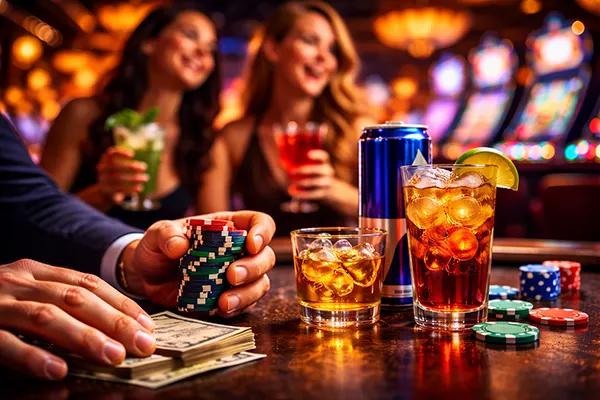
The Regulatory and Responsible Gambling Perspective in 2026
As of 2026, awareness of alcohol–energy drink combinations has grown within public health and gambling policy discussions. The UK Gambling Commission and several European regulators emphasise the importance of safer gambling environments, particularly in land-based venues where complimentary drinks may be available.
Some casinos have introduced staff training to recognise visible signs of over-intoxication combined with agitation or hyperactivity — a pattern more consistent with stimulant masking. While caffeine itself is legal and widely consumed, its interaction with alcohol is now better understood in risk-management frameworks.
Health authorities, including Public Health England and the European Food Safety Authority, continue to advise moderation in caffeine intake. Energy drinks can contain between 80 mg and 200 mg of caffeine per serving, and multiple servings combined with alcohol may exceed recommended daily limits, further increasing physiological stress.
Practical Guidance for Players
Understanding the interaction is more effective than relying on willpower alone. Players who choose to drink in a casino setting can reduce risk by avoiding mixed alcoholic energy drinks and alternating alcoholic beverages with water. Monitoring total caffeine intake is equally important, especially during long sessions.
Setting time and financial limits before play — and adhering to them regardless of perceived alertness — is critical. The feeling of control is not the same as actual cognitive control. Using external tools such as alarms, cash limits or self-exclusion features provides a safeguard against distorted self-assessment.
Ultimately, the combination of alcohol and caffeine does not enhance strategic ability. It creates stimulation layered over impairment. Recognising this mismatch allows individuals to make informed choices and maintain clearer judgement in environments designed to encourage continuous engagement.