

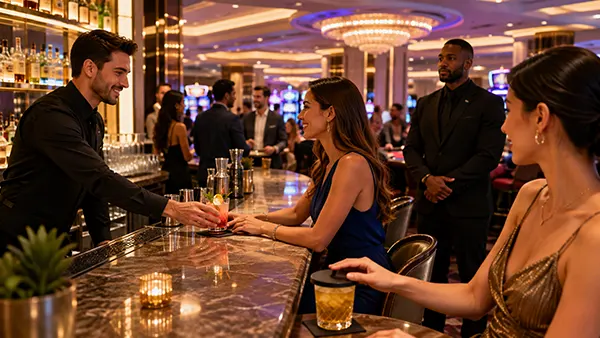
Drink Spiking in Casino Bars: How Guests’ Drinks Are Protected and What Staff Should Do
Drink spiking is a safeguarding issue that casino bars cannot treat simply as another consequence of excessive drinking. It means giving someone alcohol or another substance without their knowledge or consent, and extra alcohol itself can constitute spiking. A casino presents a particular working environment because guests may spend several hours moving between gaming areas, bars, restaurants and other parts of the premises. Someone who suddenly appears confused, unsteady or unusually intoxicated may therefore first be noticed by a bartender, waiter, dealer, security officer or floor employee rather than by a friend. Effective prevention depends on all of these people knowing how to raise a concern quickly. Protective drink covers, good CCTV coverage and attentive service can reduce opportunities for interference, but physical products alone cannot prevent every incident. The decisive factors are clear procedures, trained staff, prompt safeguarding and careful preservation of potential evidence.
Why Drink Spiking Requires Specific Safeguards in Casino Bars
Spiking is sometimes associated only with sedative drugs, but this is an incomplete picture. Alcohol is also used, for example when someone secretly adds spirits to another person’s drink or deliberately serves a stronger drink than the person agreed to consume. NHS guidance updated in 2026 states that alcohol is the substance most commonly used for drink spiking. This distinction matters in casino bars because staff should not wait for evidence of an unfamiliar drug before taking a report seriously. A guest who has consumed substantially less alcohol than their behaviour would suggest may require assistance even when there is no visible sign that anything was placed in the glass. The immediate question for employees is not which substance might be responsible, but whether the person is safe and whether their condition is unexpectedly different from what staff or companions observed earlier.
Casino bars can reduce opportunities for interference through ordinary service procedures as well as specific anti-spiking measures. Unattended drinks should not be left indefinitely on bar counters or tables, and glasses that have clearly been abandoned should be removed. Protective drink covers and suitable bottle stoppers can be made available to guests who want them. Staff should also pay attention to unusual behaviour around drinks, particularly attempts to handle another guest’s glass without a clear reason. These measures should be applied without creating the impression that customers are personally responsible for preventing a crime. A drink cover is an additional barrier, not a guarantee, and a guest who did not use one should receive exactly the same support if an incident is suspected. Responsibility for spiking remains with the person who interferes with the drink.
The legal context also became more explicit during 2026. The Crime and Policing Act 2026 received Royal Assent on 29 April and contains a provision specifically headed around administering harmful substances, including spiking, replacing older language in the Offences against the Person Act 1861 when the relevant provision is commenced. Implementation of the Act is being introduced in stages, so venue procedures should rely on current police and licensing guidance rather than assumptions about the commencement date of individual sections. For casino operators, the practical position is simpler: suspected spiking is a potential crime and a safeguarding incident, not merely poor customer behaviour. Licensed premises are expected to promote public safety and the prevention of crime and disorder, while local licensing authorities can consider the measures that individual venues use to address identified risks.
Warning Signs Staff Should Recognise Before an Incident Is Confirmed
There is no single appearance that proves someone has been spiked. Possible signs can overlap with alcohol intoxication, illness, a reaction to medication or another medical emergency. Staff may notice sudden confusion, difficulty speaking clearly, poor coordination, unusual drowsiness, nausea, vomiting, memory problems or a level of intoxication that seems inconsistent with the amount the guest is known to have consumed. A person may also tell staff directly that their drink tastes different, that they lost sight of it, that somebody handled it or that they feel much more impaired than expected. These reports should not be dismissed simply because the employee did not witness anything being added. The role of casino staff is not to diagnose the substance or determine whether a crime definitely occurred. Their first responsibility is to recognise vulnerability and begin the venue’s response procedure.
Changes in behaviour are particularly important in a casino because staff may have observed a guest over a relatively long period. A dealer might notice that a regular participant suddenly cannot follow a game they had previously been playing normally. A waiter may see a person become unsteady shortly after returning from the bar, while security staff may encounter someone who appears disorientated when attempting to leave. None of these observations independently confirms spiking, but together they can provide useful context. Employees should therefore have a simple method for passing concerns to a supervisor or safeguarding lead. A bartender should not assume that security has already noticed a problem, and security should not automatically categorise an impaired guest as merely drunk when another member of staff reports that the change was unusually sudden.
Rapid drink-testing products may appear useful, but they have important limitations. NHS guidance notes that commercially available rapid tests can detect only a limited number of possible substances and their accuracy varies. A negative result therefore cannot establish that a drink has not been spiked, and staff should never make medical or safeguarding decisions solely on the basis of a testing strip or kit. If the guest has worrying symptoms, the appropriate response is based on their physical condition and circumstances. The suspected drink can also be relevant evidence and should not be repeatedly handled, tasted or subjected to unnecessary informal testing. When there is a credible report, preserving the drink and container for potential police examination is more important than trying to obtain an immediate answer behind the bar.
How Casino Bars Can Reduce the Risk Before an Incident Happens
Prevention begins with the design of routine bar operations. Staff should know what to do with unattended glasses, where a concerned guest can ask for help and which supervisor takes responsibility when spiking is reported. Protective drink covers and bottle stoppers should be easy to request without requiring the guest to explain why they want one. Information about spiking can also be displayed where customers can see it, making clear that reports will be taken seriously. These measures are most effective when they form part of normal service rather than appearing only after a local incident receives attention. A policy stored in an office has little value if a bartender working a busy evening shift does not know how to use it. The procedure should be short enough to remember and detailed enough to identify who takes control of safeguarding, evidence and communication.
CCTV is particularly valuable when a suspected incident has occurred. Cameras should be maintained so that relevant footage can actually be retrieved, and staff responsible for security should know how to protect recordings from being automatically overwritten. When a report is made, the useful period may extend beyond the few minutes immediately before the guest became unwell. Footage could show where the drink was purchased, who approached the table, whether it was left unattended and where the people involved moved afterwards. Casino security teams should therefore establish the approximate timeline with the guest, their companions and relevant employees before deciding which recordings may matter. The purpose is not for staff to conduct their own criminal investigation but to prevent potentially useful material from disappearing before police can assess it.
Employee awareness is at least as important as cameras or protective products. Training should include bar employees, waiting staff, managers and security personnel because an affected guest may approach any of them first. Since 1 April 2025, SIA door supervisors renewing their licences have been required to complete refresher training that includes protecting vulnerable people and specific content on spiking. A casino should still provide venue-specific instructions because an external qualification cannot explain its individual floor layout, welfare area, internal telephone numbers or incident-reporting process. Brief refresher sessions are useful for permanent staff, while agency and temporary workers need sufficient information before beginning a shift. Employees should understand that taking a concern seriously does not mean declaring that a crime has definitely happened; it means responding safely while the facts remain uncertain.
Why Prevention Must Go Beyond Drink Covers and Warning Posters
Physical barriers have a useful but limited role. A cover may make it harder to place something into an open glass, while a bottle stopper can restrict access to the contents of certain containers. Neither measure protects every type of drink or every possible situation. Covers can be removed, damaged or used incorrectly, and a beverage may be interfered with before it reaches the guest. This is why prevention should combine several controls rather than relying on one product. Good visibility at serving points, responsible clearing of unattended drinks, functioning CCTV, staff awareness and a clear response to suspicious behaviour all address different stages of the risk. The aim is not to promise a completely risk-free bar but to make interference more difficult, increase the chance that concerning behaviour is noticed and ensure that staff act promptly when something goes wrong.
Service practices also matter. Government guidance for venues advises against promoting rapid alcohol consumption. In a casino environment, alcohol service should remain separate from the excitement or frustration associated with gambling outcomes. Staff should not encourage a person to drink quickly because of a win, a loss or a promotional activity, and they should be prepared to slow or stop service when normal responsible-service rules require it. This helps distinguish ordinary hospitality from circumstances where sudden impairment may otherwise be overlooked. If a guest becomes markedly less alert, the explanation should not automatically be that they have simply consumed more than staff realised. A short conversation with colleagues or the guest’s companions may establish that their condition changed unexpectedly and that safeguarding action is needed.
Communication between departments can close gaps that physical measures cannot. In many casinos, a drink may be ordered at one point, carried through another area and consumed somewhere else. The bartender who served it may therefore have no view of what happens next. A simple internal alert system allows floor staff, bar teams and security to share a concern without broadcasting sensitive information in front of other customers. Employees also need to know where to take a vulnerable person if they need a quieter environment away from crowds. That area should be accessible to authorised employees and suitable for observation while medical help, trusted friends or police are contacted. It should never become a place where a visibly unwell customer is left alone simply because removing them from the gaming floor makes the immediate operational problem less noticeable.
What Staff Should Do When Drink Spiking Is Suspected
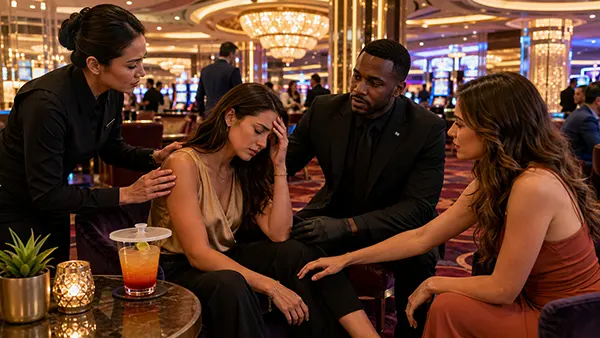
Once a guest reports suspected spiking, safeguarding takes priority. A member of staff should stay with the person or make sure another responsible employee does so, move them to a safer and quieter place if appropriate, and establish whether urgent medical assistance is needed. Staff should try to locate friends or another trusted person identified by the guest, but they should be cautious about allowing an unknown companion to take control of the situation. If the person is in immediate danger or needs immediate medical attention, 999 should be called. NHS guidance also directs people to 111 for urgent medical advice when the situation is not an emergency. An employee should not delay seeking help while trying to identify the substance involved. Treatment of suspected spiking is generally guided by the person’s symptoms rather than by an immediate identification of a particular drug.
The suspected drink, its glass or bottle and other potentially relevant material should not be thrown away. Home Office guidance specifically advises venues to secure affected drinks and containers and to retain relevant CCTV footage. Security should be informed promptly because the person responsible may still be inside the premises. Staff can record basic factual information such as the approximate time of the report, where the guest had been sitting, where the drink came from and what the guest or witnesses said, while avoiding leading questions or attempts to conduct a detailed interrogation. Police should be contacted in accordance with the venue’s incident procedure. Reporting quickly can matter because some substances may become difficult to detect after a relatively short period, and the police may decide that biological or drink testing is appropriate.
The guest should be treated as a person who may have experienced a crime, not as a disciplinary problem. Staff should avoid judgemental comments about how much the person drank, why their glass was unattended or who they were socialising with. If they want to leave, the priority is helping them do so safely rather than simply directing them to the exit. Where sexual assault is suspected or disclosed, the situation requires particularly careful handling. Sexual Assault Referral Centres can provide specialist medical and forensic services, and support can be available even when a person is not ready to make an immediate police report. Casino employees do not need to obtain the full details of an assault. Their role is to maintain immediate safety, arrange appropriate professional assistance, preserve relevant evidence and avoid placing unnecessary pressure on the person.
Training, Evidence and Follow-Up After a Suspected Incident
A written incident record helps the casino understand what occurred and supports an accurate account if information is later requested by police or licensing authorities. The record should distinguish observations from assumptions. For example, “guest appeared unable to walk without assistance at 23:20” is more useful than “guest was drugged”, which states something the employee may not know. Relevant CCTV should be identified and retained according to the venue’s security procedure, and the suspected drink should remain secured rather than returned to service or discarded during routine clearing. Managers should also establish which employees interacted with the guest and which member of staff contacted medical services or police. Clear records reduce reliance on memory, particularly when an incident happens during a busy shift and employees may not be interviewed until later.
After the immediate response, managers should review the event without waiting for proof that a particular substance was found. A review can consider whether staff recognised the concern quickly, whether the guest could access a safe area, whether CCTV footage was preserved and whether responsibility was clear between the bar, security and management teams. It can also identify practical weaknesses, such as employees not knowing where protective drink covers were stored or a busy service area where abandoned glasses remained for too long. The purpose is not to create blame after every allegation. Spiking can occur even in well-managed premises. The useful question is whether reasonable safeguards operated as intended and whether anything could be changed to make the next response faster, safer or easier for the affected guest.
Casino bars ultimately need a response that works during an ordinary busy shift, not only on paper. Staff should recognise that sudden impairment may have several possible causes, treat suspected spiking seriously, arrange medical assistance according to the person’s condition, protect them from further vulnerability and preserve material that may assist the police. Drink covers, bottle stoppers and CCTV can support that system, but none replaces trained employees who know what to do. Regular refresher training is especially important when bar staff, gaming employees, managers and contracted security personnel work under different supervisors. When everyone understands the same basic procedure, a concern raised anywhere in the casino can reach the right person quickly. That combination of prevention, safeguarding and evidence preservation offers a more realistic approach to drink-spiking risk than relying on a single product or expecting guests to protect themselves.