

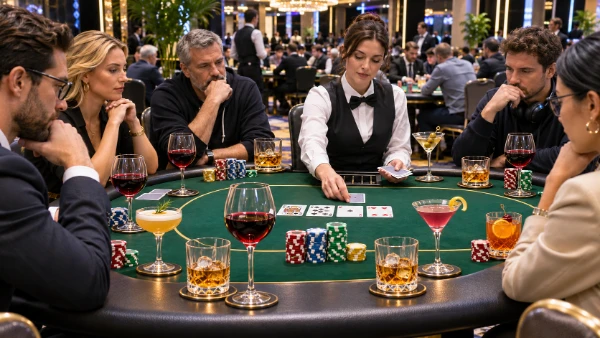
Drinks at Poker Tournaments: Etiquette and Why Organisers Restrict Alcohol at the Tables
A glass of wine, a cold beer or a cocktail may seem perfectly ordinary in a casino, but alcohol becomes a more complicated matter during a poker tournament. Unlike casual social gatherings, competitive poker requires concentration, clear communication and respect for strict playing procedures. A drink can affect more than the person holding it, particularly when decisions involve substantial prize money and several hours of continuous play. Tournament organisers therefore establish rules governing alcoholic beverages, service arrangements and player conduct. These restrictions are not necessarily intended to prohibit drinking altogether. Their purpose is to protect fair competition, maintain an orderly atmosphere and prevent avoidable disputes. Understanding the reasons behind these policies helps players distinguish between acceptable refreshment, poor table manners and behaviour that could lead to disciplinary action.
Why Alcohol Restrictions Matter at Poker Tournaments
Poker tournaments create a different environment from ordinary casino entertainment. Participants compete for a defined prize pool, follow scheduled blind increases and must make decisions within an established set of rules. A single mistake can eliminate a player who has spent hours building a substantial chip stack. Alcohol complicates this process because its effects are not limited to obvious drunkenness. Even before someone appears intoxicated, drinking can reduce self-control, weaken judgement and make it harder to recognise mistakes. Tournament organisers must consider these risks while ensuring that every participant can play without unnecessary interruptions, intimidation or confusion about betting decisions.
There is no universal international rule prohibiting alcoholic drinks at every poker tournament. Individual casinos and event organisers establish their own beverage policies, subject to applicable licensing requirements and local law. Some venues permit drinks at the tables, while others restrict alcohol to designated areas or prohibit particular containers. The distinction matters because the Poker Tournament Directors Association (TDA) provides widely recognised tournament rules without imposing a blanket ban on alcohol consumption. Its September 2026 rules nevertheless identify substance impairment that affects behaviour or compromises an event as a conduct violation. Consequently, permission to purchase a drink should never be confused with permission to behave irresponsibly.
Restrictions also protect dealers and tournament staff. A dealer must identify betting actions, manage cards and chips, calculate pots where necessary and maintain the correct sequence of play. A participant who repeatedly interrupts proceedings, challenges straightforward decisions or struggles to communicate can delay the entire table. Tournament directors may then need to investigate complaints and settle disputes that could otherwise have been avoided. Excessive drinking can also create problems for neighbouring tables through shouting, arguments or inappropriate remarks. Clear beverage rules help staff intervene before an isolated incident develops into a wider disruption, although organisers remain responsible for applying those rules consistently.
How Alcohol Can Influence Decisions and Table Behaviour
Alcohol affects the abilities that poker players regularly rely upon, particularly judgement, attention and behavioural control. The US National Institute on Alcohol Abuse and Alcoholism explains that alcohol can reduce inhibitions and impair decision-making before obvious signs of intoxication appear. In poker, this may translate into calling an expensive bet without properly considering an opponent’s likely hand, overlooking a change in blind levels or taking unnecessary risks after losing a large pot. However, alcohol does not affect everyone identically, and a particular betting mistake cannot automatically be attributed to drinking. The important point is that alcohol introduces an avoidable source of impairment into a game where careful decisions matter.
Another concern involves emotional reactions. Tournament poker already creates pressure when players experience repeated losses, difficult decisions or elimination close to a prize-paying position. Alcohol can make frustration harder to manage and increase the likelihood of confrontational behaviour. A participant might criticise an opponent’s strategy, argue with the dealer or make personal comments that would be inappropriate in any competitive setting. Such behaviour affects people who have not consumed alcohol and may discourage them from speaking up when something is wrong. The 2026 TDA conduct rules expressly address harassment, intimidation, disruptive chatter and impairment, giving tournament officials grounds to intervene when behaviour threatens the event.
Alcohol can also affect communication, which is especially important when chips and verbal declarations have immediate consequences. Poker rules distinguish between actions such as calling, raising, checking and folding, and players are expected to communicate their intentions clearly. An unclear statement can create a dispute about whether a bet was made or how much was wagered. The 2026 TDA rules place responsibility on players to make their actions understandable and use recognised betting terminology. Drinking does not automatically invalidate an action, nor does it excuse an accidental declaration. For that reason, participants should avoid drinking whenever it could interfere with their ability to understand instructions, follow the action or communicate accurately.
Drinking Rules and Proper Etiquette at the Poker Table
Acceptable drinking etiquette begins with the tournament’s published conditions rather than personal assumptions about casino hospitality. Before play starts, participants should check whether alcoholic beverages may be brought to the table, whether drinks must be purchased from the venue and whether restrictions apply to glass bottles or open containers. Policies can differ between tournaments held in established casinos, temporary event venues and private clubs. Permission to drink in a building does not necessarily mean that every beverage is permitted beside the cards. Players should also respect any instructions given by the dealer or floor staff, especially when space around a table is limited.
Keeping drinks away from cards, chips and betting areas is an elementary precaution. Spilled liquid can damage playing cards, obscure chip denominations or interrupt a hand while staff clean the surface. Although a spill is not necessarily a disciplinary offence, it can force a temporary halt and create uncertainty if cards or chips have been disturbed. Players should use designated cup holders where provided and avoid placing glasses where another participant might accidentally knock them over. Drinks should never obstruct the dealer’s working area or another player’s view of the action. These precautions are relevant to water, coffee and soft drinks as well as alcohol.
Good etiquette also involves recognising that tournament staff are responsible for maintaining order, not providing unlimited personal service. Players should request refreshments politely, avoid interrupting a dealer during an important decision and follow the venue’s arrangements for ordering drinks. If alcohol service is refused, arguing at the table is unlikely to change the decision and may create a separate conduct problem. Similarly, offering another participant a drink should not involve pressure or repeated requests. Some players abstain for strategic, personal, religious or medical reasons. Respecting their choice is part of maintaining a professional tournament atmosphere, regardless of whether alcohol is available elsewhere in the venue.
What Happens When a Player Becomes Intoxicated?
Not every incident involving alcohol results in immediate disqualification. Tournament officials normally assess the player’s actual conduct, the seriousness of the incident and the applicable event rules. Someone who has consumed a drink but remains courteous and follows every procedure may present no disciplinary concern. A participant who becomes aggressive, repeatedly delays play or cannot follow basic instructions creates a substantially different situation. Under the 2026 Poker TDA rules, tournament staff have discretion to address prohibited conduct, including substance impairment that affects social behaviour or compromises the competition. Organisers can also enforce stricter house policies where these have been established.
Disciplinary measures may include a verbal warning, a requirement to leave the table temporarily, missed-hand or missed-round penalties, and disqualification. The appropriate response depends on the circumstances and the event’s rules; it is not determined by a universal number of alcoholic drinks. Under TDA procedures, a player serving a missed-round penalty must remain away from the table while blinds and antes can continue to be deducted from their stack. Disqualification is more serious because the player’s tournament participation ends and their chips are removed from play. The rules also allow penalties for abusive or disruptive behaviour, irrespective of whether alcohol caused the incident.
Players who believe another participant is impaired should contact the dealer or request assistance from the floor rather than confronting that person directly. A useful complaint describes observable behaviour, such as repeated insults, threatening language, unclear betting actions or persistent disruption. Simply claiming that an opponent has been drinking is not enough to establish misconduct. Tournament staff can assess the situation, consult witnesses and determine whether a warning or stronger intervention is appropriate. This approach protects the reporting player while allowing officials to make a proportionate decision. The same principle applies when someone suspects unfair treatment: concerns should be raised through the tournament’s established procedures.
How Organisers Balance Hospitality, Safety and Fair Play
Casinos often provide bars, restaurants and other hospitality services alongside poker events, so organisers must decide how those facilities interact with competitive play. A tournament may last several hours or continue over multiple days, making access to refreshments a practical necessity. Restricting alcohol does not require denying players ordinary drinks or creating an unnecessarily severe atmosphere. Instead, organisers can establish appropriate service locations, introduce clear rules about containers and ensure that non-alcoholic options remain readily available. The objective is to separate reasonable hospitality from conduct that interferes with competition. Whatever policy is adopted should be communicated before participants have committed themselves to the event.
Local gambling and alcohol regulations can also influence how tournaments operate. In Great Britain, the Gambling Commission distinguishes between licensed casino operations and certain forms of poker permitted in clubs or alcohol-licensed premises under specific conditions. These arrangements are not interchangeable, and the permission to serve alcohol does not determine whether a poker tournament is legally authorised. For example, poker conducted as exempt gaming in an alcohol-licensed venue is subject to statutory conditions concerning stakes, prizes and participation charges. Organisers therefore need to consider the relevant gambling rules separately from alcohol licensing requirements. Tournament-specific drinking restrictions may be stricter than the minimum obligations imposed by law.
Consistent enforcement is particularly important during major events. A well-known player, a substantial chip leader or someone approaching the final table should not receive special treatment when conduct rules are breached. Favouritism can undermine confidence in the competition and create resentment among participants. Clear written policies help tournament directors explain their decisions and reduce disagreements about acceptable behaviour. Staff should also be able to respond discreetly when a participant appears impaired, rather than allowing a situation to escalate publicly. Restricting further alcohol service, separating people involved in an argument or involving venue security may be appropriate depending on the circumstances and local requirements.
Practical Drinking Etiquette for Long Tournament Sessions
Players attending a long tournament should plan refreshments around the playing schedule rather than relying on opportunities to order drinks during important hands. Water and other non-alcoholic beverages are generally more suitable for maintaining a steady routine without introducing alcohol-related impairment. Regular meals are also worth planning, particularly when an event includes several lengthy levels and limited breaks. Anyone choosing to consume alcohol should follow the venue’s rules and remain aware that drinking can influence judgement even before noticeable intoxication occurs. There is no reliable number of drinks that guarantees unimpaired poker decisions, because individual responses depend on several factors, including the amount consumed and the time involved.
Breaks provide a more convenient opportunity to visit a bar, purchase refreshments or eat without disrupting another participant’s turn. Nevertheless, players must return promptly because scheduled play generally continues even when a seat is temporarily empty. A person who stays away too long may lose chips through compulsory blinds and antes, while their hands are dealt and folded according to tournament procedures. Drinking should never become a reason to ignore the clock, miss an announced table move or delay other players. Participants should also arrange safe transport if they have consumed alcohol and avoid driving while impaired. These considerations remain relevant even after elimination from the tournament.
Ultimately, responsible tournament etiquette depends on respecting the distinction between casino hospitality and competitive poker. An alcoholic drink may be permitted at one event and restricted at another, but the basic obligations remain consistent: communicate clearly, protect cards and chips, follow instructions and treat opponents and staff respectfully. Organisers restrict alcohol because impaired judgement, disruptive behaviour and preventable accidents can compromise an event involving many participants, not merely the individual drinking. The most reliable approach is to consult the tournament’s own conditions, choose refreshments that do not interfere with play and accept staff decisions made to preserve a safe and orderly competition. These habits benefit everyone sharing the table.